
I first came across Plan Vivo more than twenty-five years ago, when carbon markets were still a very small world.
What interested me then is still what interests me now. Plan Vivo treats a forest, farm or grassland as a living place, not simply as a container for carbon.
The carbon matters, obviously. It has to be measured properly, the assumptions have to stand up, and somebody independent has to check the work.
But on a nature project, that is only part of the test.
You also need to know who controls the land, who is being paid, whether local people genuinely support the project, and whether they will still have a reason to protect that landscape in ten or twenty years.
C Level has worked with Plan Vivo projects since 2000. We have stayed with the standard because those questions are built into its foundations. Most companies reach these projects by buying carbon credits for business.
It is not perfect, and it is not the right carbon standard for every buyer.
This page explains where I think it is unusually strong, where its limitations are, and what I would look at if I were buying Plan Vivo credits for my own organisation.
What is Plan Vivo?
Plan Vivo is a certification standard for community-led nature projects, administered by the Plan Vivo Foundation, an independent charity based in Edinburgh.
It is the oldest standard of its kind.
The Foundation operates two schemes:
- PV Climate, for carbon projects
- PV Nature, for biodiversity projects
This page covers PV Climate. We cover biodiversity separately on our biodiversity projects page. The unit itself, and whether a business can buy one yet, is on our biodiversity credits page.
The Plan Vivo Foundation sets the rules, approves methodologies, oversees certification and maintains the framework under which projects operate.
It does not sell certificates.
Certificates are bought either directly from certified projects or through registered intermediaries such as C Level.
That separation matters.
The organisation setting the standard is not the same organisation selling you the carbon.
For a buyer, that gives you an important line of independence between the standard, the project and the commercial transaction.
What makes Plan Vivo different?
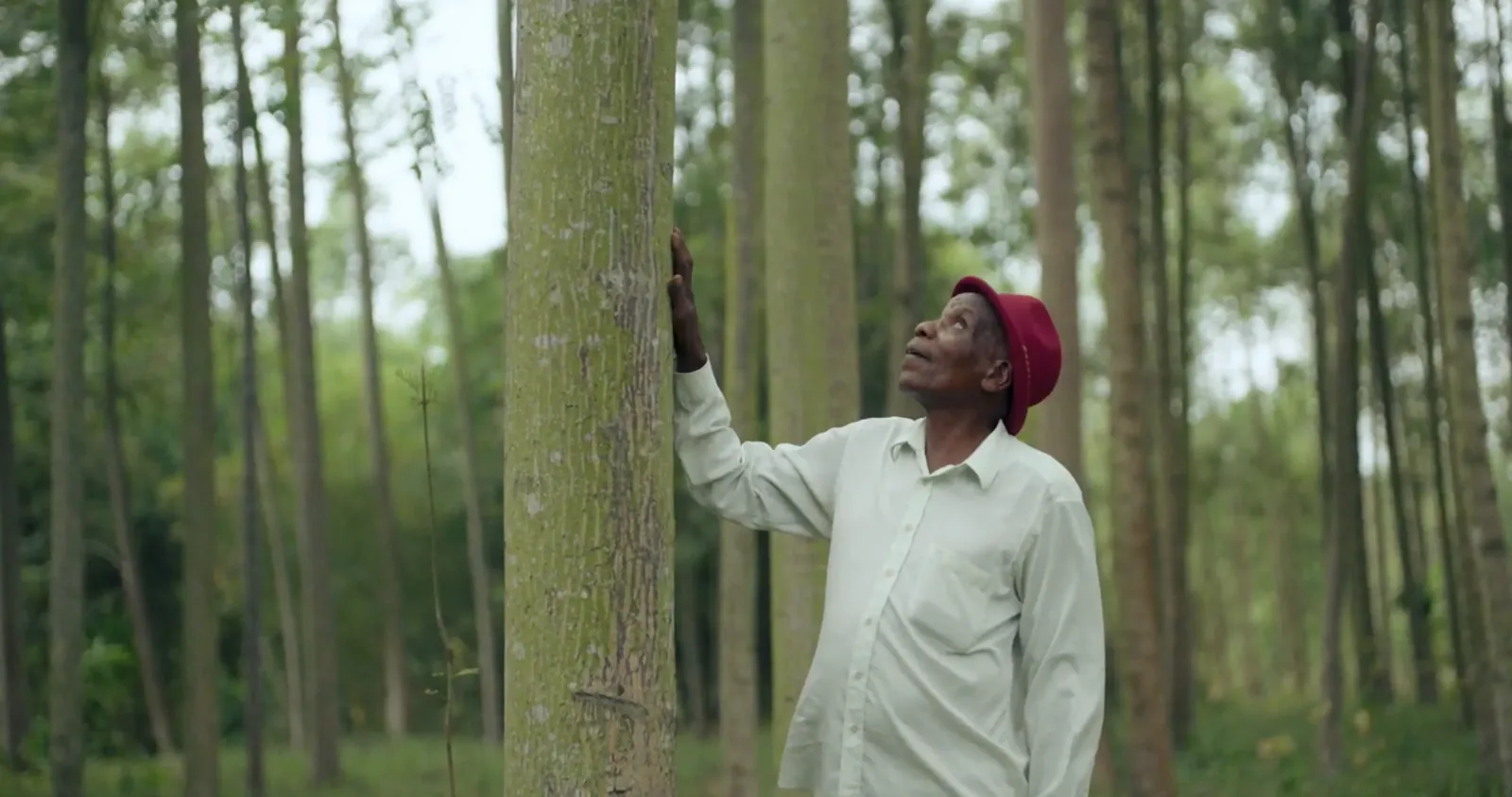
The voluntary carbon market has become much more sophisticated over the past decade.
It has also become much more complicated.
Plan Vivo’s central idea remains unusually simple:
If the long-term health of an ecosystem depends on the people living within it, those people have to be central to the economics of protecting it.
That changes the design of a project.
Communities are not there simply to provide labour.
Their land rights matter.
Their consent matters.
Their knowledge of the landscape matters.
Their reason for staying involved five, ten or twenty years later matters.
And where the money goes matters.
Plan Vivo requires at least 60% of the revenue generated from sales of Plan Vivo Certificates at project level to benefit project participants and local stakeholders through approved benefit-sharing arrangements.
That is one of the reasons I have stayed close to the standard.
In land-use projects, social structure and carbon integrity are not separate issues.
If the people controlling the land have no durable reason to protect the forest, mangrove, farm or grassland, eventually the carbon model has a problem too.
At its best, Plan Vivo uses climate finance to make stewardship economically worthwhile.
That is a much more serious proposition than treating local communities as an attractive co-benefit added to a carbon project after the calculations have been done.
What is a Plan Vivo Certificate?
One tonne of verified carbon reduction or removal
For carbon projects, a Plan Vivo Certificate represents one tonne of CO2e associated with a recognised climate outcome under the applicable Plan Vivo framework.
But the type of outcome matters.
A removal takes carbon dioxide out of the atmosphere and stores it, for example through tree growth or ecosystem restoration.
A reduction means emissions are lower than they would otherwise have been against an evidenced baseline.
Avoided deforestation is normally a reduction.
Those two outcomes should not be blurred.
If your organisation has made a procurement commitment specifically to carbon removal, an avoided-deforestation credit is not the same thing.
That does not make the avoided-deforestation project weaker.
It makes the climate outcome different.
Our Hadza and Datooga project in Tanzania is a good example. Its carbon benefit comes from reducing forest clearance and degradation. It therefore generates avoided emissions rather than atmospheric removals.
A serious buyer should know exactly which of those outcomes sits behind the unit being purchased.
If your supplier cannot explain that clearly, ask again.
Issuance, transfer and retirement
A carbon certificate does not exist simply because a project says it has protected a forest or planted trees.
The work has to be measured and reported according to the standard that applies to that project.
Independent checks then determine whether the relevant requirements have been met.
Once eligible certificates are issued, they are recorded in the registry and given unique serial numbers.
When a verified certificate is retired, it is permanently removed from circulation within that registry.
For a corporate buyer, this is one of the most important controls in the whole process.
A C Level certificate with your company name on it is useful.
It is not the underlying proof.
The stronger evidence is the chain behind it: project documentation, verification records, registry data, serial numbers and the retirement record.
A receipt proves you paid someone.
A registry record shows what happened to the carbon asset you paid for.
Carbon is only one part of the system
The easiest way to misunderstand a nature-based carbon project is to think of the landscape simply as a carbon store.
A living landscape has competing uses.
A tree can remain standing and continue storing carbon, protecting soil, regulating water and supporting habitat.
Or it can be cut.
A mangrove can protect a coastline, support fisheries and accumulate carbon.
Or it can be cleared.
Grassland can recover under better management.
Or it can continue to degrade.
The biology matters.
So does the economics.
If conserving an ecosystem continually imposes a cost on the people living there while destroying it provides immediate income, the project is always going to be under pressure.
Plan Vivo tries to change that equation.
Carbon finance gives economic value to keeping the landscape healthy.
That is why I do not see the social side of these projects as separate from the carbon side.
It is part of the permanence strategy.
When I visit a project, I am interested in the methodology and the monitoring.
But I am also interested in something much simpler.
Do people still want to be involved?
Are they being paid as promised?
Does the project make practical sense to the people whose choices will determine what happens to the land?
Those questions rarely appear in the headline carbon number.
They matter enormously.
What Plan Vivo requires from projects
Community leadership, land rights and consent
Projects must be developed with the people living on or managing the land.
Participation has to be informed and voluntary.
That includes the principle usually described as free, prior and informed consent.
People should understand what is being proposed, be consulted before decisions are made and have a genuine ability to refuse.
This is partly an ethical safeguard.
It is also common sense.
A project designed around a landscape but against the wishes of the people who live there is unlikely to remain intact for decades.
Land rights matter for the same reason.
If nobody can clearly establish who has the right to manage the land or benefit from the project, that uncertainty eventually finds its way into project risk.
At least 60% of certificate revenue goes to communities
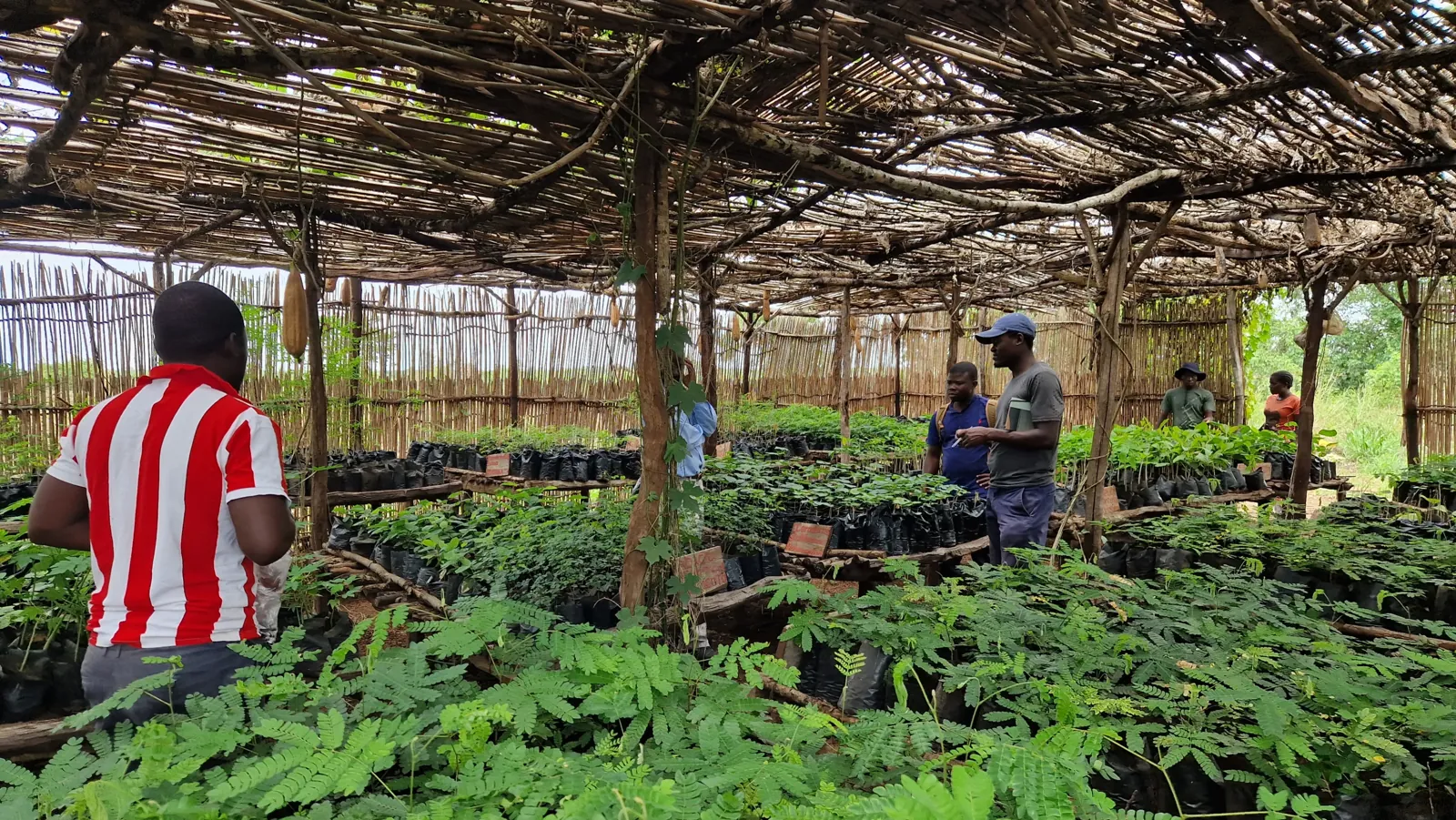
Plan Vivo requires at least 60% of certificate sale revenue at project level to benefit project participants and local stakeholders.
This is one of the clearest differences between Plan Vivo and much of the wider carbon market.
The requirement applies at project level, through the approved benefit-sharing arrangements.
Those benefits can take different forms.
They may include direct payments, employment, training, food security, community assets or other locally agreed uses.
A community-led project should not mean somebody in Europe deciding on behalf of participants what the “right” benefit looks like.
The people involved should have a meaningful say in that decision.
For buyers, this creates a different kind of climate finance.
You are not simply purchasing a carbon number generated somewhere else in the world.
A substantial share of the value created by the project remains with the people and communities whose actions make the climate outcome possible.
That is not cheap to do properly.
I do not think it should be.
Additionality and credible baselines
None of the social benefits matter to the integrity of a carbon credit if the claimed carbon outcome would have happened anyway.
That is why additionality matters.
A project has to show that the climate benefit depends on the intervention and the finance supporting it.
The baseline is equally important.
It is the estimate of what would probably have happened without the project.
This is one of the areas where buyers should remain sceptical, even with certified projects.
A generous baseline can create a large number of credits on paper without an equally large real-world difference.
Certification is valuable.
It should not replace judgement.
When we assess projects, the baseline is one of the places I look hardest.
A project can be socially excellent and ecologically valuable while still having a carbon claim that deserves careful scrutiny.
The reverse is also true.
A sound carbon methodology does not automatically tell you whether the project is well run or socially durable.
You need both.
Permanence
A tonne stored in a forest is not the same thing as a tonne stored underground.
Forests burn.
Trees die.
Drought happens.
Political conditions change.
Land-use pressure changes.
People change how they make a living.
Nature-based carbon therefore involves reversal risk.
Plan Vivo requires projects to manage that risk through long-term stewardship requirements and non-permanence mechanisms, including contributions to a pooled risk buffer.
Those measures reduce risk.
They do not turn biological systems into permanent geological storage.
If your procurement requirement is carbon storage over centuries or millennia, engineered removal with geological storage is a fundamentally different product.
There is nothing wrong with recognising that.
Different carbon solutions solve different problems.
Leakage
Stopping forest loss in one place achieves little if the same activity simply moves somewhere else.
That is leakage.
Projects therefore have to consider whether the activity they are preventing is displaced beyond the project area.
This is another reason nature-based carbon cannot be assessed solely by drawing a boundary on a map and measuring what happens inside it.
Human behaviour does not stop at the project border.
Biodiversity and social safeguards
Projects also have to consider wider impacts on people, habitats and land rights.
This broader view is one of Plan Vivo’s strengths.
A project that stores carbon while degrading biodiversity or creating serious harm for local people is not a good climate solution simply because its carbon accounting works.
The atmosphere experiences carbon as one part of a living system.
Our standards should be capable of doing the same.
How a Plan Vivo project becomes certified
A project does not become credible because somebody finds a forest and has a good idea.
There is a formal process.
- Project Idea Note: the initial concept is assessed for eligibility.
- Project Design Document: the project is developed against the applicable standard and methodology.
- Independent validation: an external body assesses whether the proposed design meets the requirements.
- Monitoring and reporting: the project measures what happens on the ground.
- Verification and issuance: eligible reported outcomes are independently assessed before verified certificates are issued.
For buyers, this creates an important distinction.
A project can be interesting, well designed and potentially transformative while still having no verified certificates available to buy.
A project being developed and a project issuing verified carbon units are not the same thing.
That matters if your organisation is planning a budget, making a public claim or working towards a procurement deadline.
Plan Vivo publishes its methodologies and certification requirements publicly.
For serious due diligence, read them.
Our job is to help you interpret the evidence and understand what you are purchasing.
It is not to replace the evidence.
How the registry and retirement system works
Registry records
Plan Vivo Certificates are recorded in the Plan Vivo registry.
The registry links certificates to the project that generated them and provides the underlying transaction trail.
That matters because the evidence does not sit solely with C Level or the project developer.
For a serious corporate buyer, third-party registry evidence is an important part of due diligence.
Serial numbers and double counting
Every issued certificate carries a unique serial number.
That helps prevent the same unit from being repeatedly transferred or retired within the registry.
Once a verified certificate is retired, its serial number provides evidence that the unit has been permanently removed from circulation.
This is why I encourage buyers not to stop at the word “certificate”.
Ask to see the retirement evidence.
Ask for the serial numbers.
Ask what registry the units sit on.
Ask whose name appears on the retirement.
Those are simple questions and a credible supplier should be comfortable answering them.
What C Level does for buyers
When you purchase eligible Plan Vivo Certificates through C Level, we handle the transaction and retirement process.
Depending on the purchase, we provide:
- the issuing project;
- standard version and unit status;
- vintage where applicable;
- serial numbers;
- retirement date;
- the name or reference under which the units were retired;
- relevant registry evidence;
- supporting project and verification documentation.
For larger organisations, this is the evidence chain your sustainability team, procurement department or assurance provider should expect.
We also explain what that evidence does and does not allow you to claim.
That last part matters.
A technically valid carbon purchase can still become a communications problem if the wording goes beyond the evidence.
What the Core Carbon Principles mean for Plan Vivo
Last checked: 17 August 2026. This status can change and should be verified before relying on it for procurement.
The Integrity Council for the Voluntary Carbon Market created the Core Carbon Principles, or CCPs, as an independent benchmark for carbon-credit quality.
There are two different levels of assessment.
Plan Vivo has achieved eligibility at programme level where specified conditions are met.
That is meaningful.
It means the programme’s governance and overarching systems have been assessed against the Integrity Council’s requirements.
But programme-level eligibility does not automatically mean individual Plan Vivo credits carry the CCP label.
For that to happen, the relevant methodology also has to complete the separate approval process and all applicable programme conditions must be met.
As at 17 August 2026, no Plan Vivo methodology has been approved for the CCP label.
So the position is:
Plan Vivo is CCP-Eligible at programme level under specified conditions. Plan Vivo credits do not currently carry the CCP label.
A CCP label is not the same test as an SBTi one either. Our guide to Plan Vivo carbon credits and SBTi sets out what the Corporate Net-Zero Standard asks of a certificate, and why a reported certificate is not a verified one.
That distinction is easy to lose in marketing.
We will not lose it here.
If your procurement policy specifically requires CCP-labelled credits, Plan Vivo does not currently satisfy that requirement.
What Plan Vivo looks like on the ground
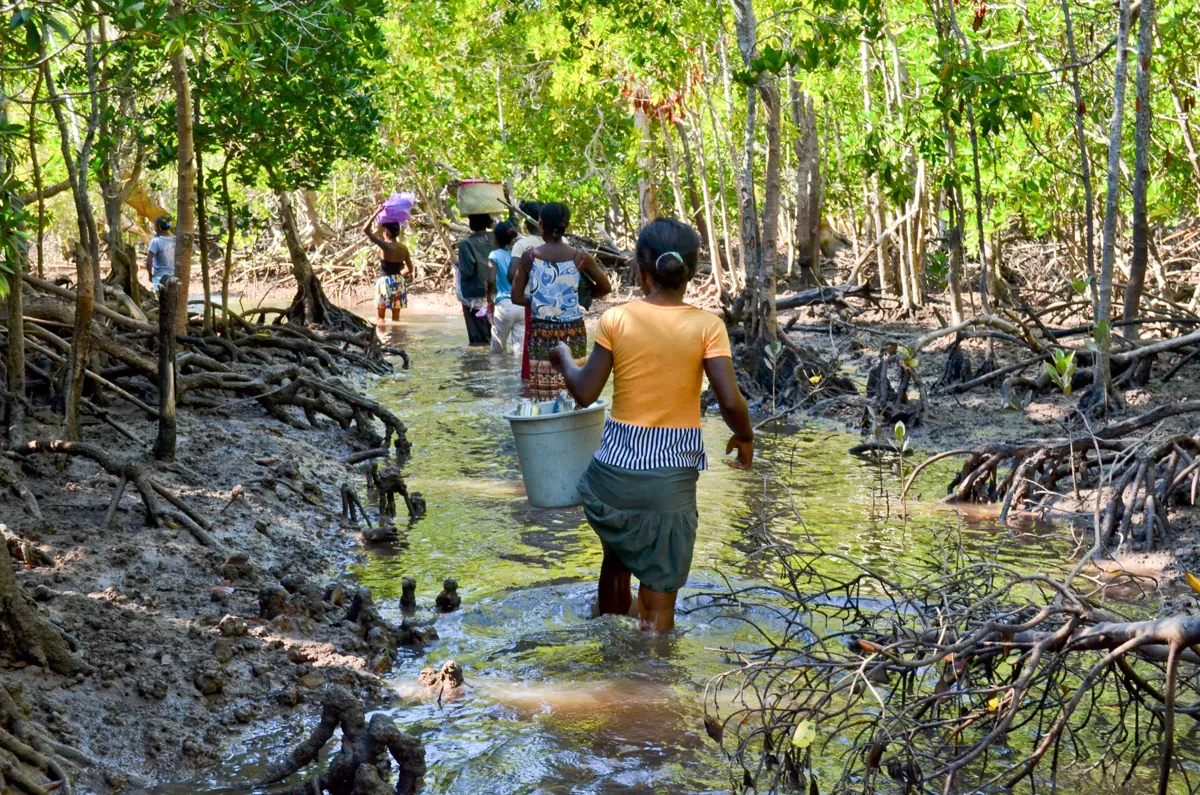
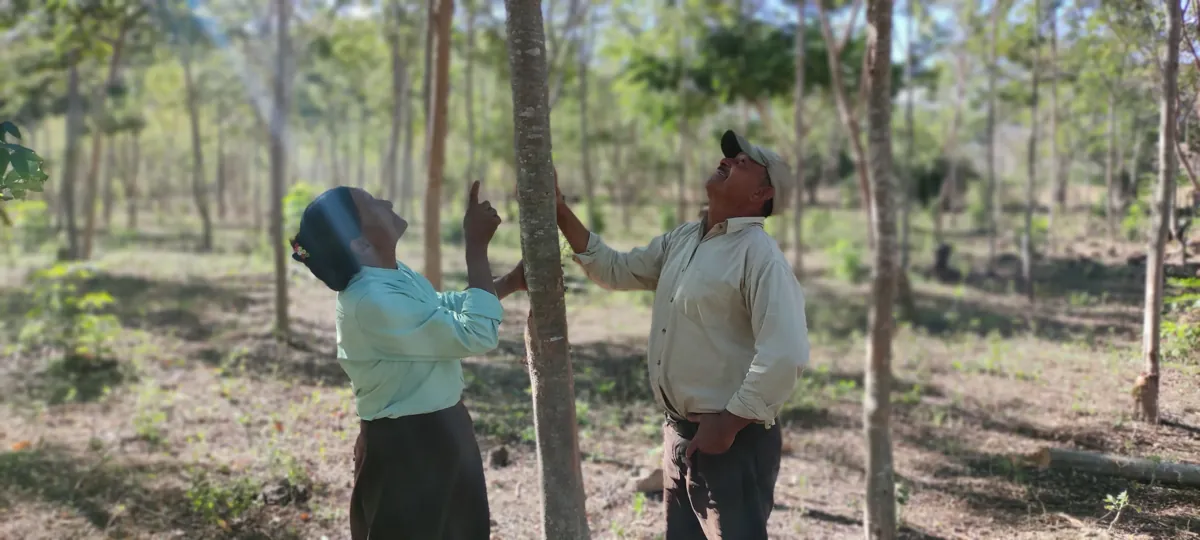

Standards become real in landscapes.
That is the part of this work I have always cared about most.
In Kenya, Mikoko Pamoja combines mangrove protection and restoration with community development.
In Mexico, Scolel’te has worked with farmers and communities on agroforestry and forest restoration since the 1990s.
In Tanzania, Hadza hunter-gatherers and Datooga pastoralists are involved in protecting woodland from clearance.
In Mongolia, pastoral communities are restoring degraded grasslands.
In Nicaragua, CommuniTree works with farmers to establish and maintain trees across agricultural landscapes.
Different ecosystems.
Different cultures.
Different economic pressures.
Different carbon mechanisms.
What connects them is not a particular tree species or methodology.
It is the belief that landscapes are more likely to endure when the people closest to them have a meaningful stake in their future.
That sounds simple.
Making it work over ten or twenty years is not.
When I visit projects, I pay attention to the details that rarely make it into carbon-market summaries.
Are payments arriving?
Are farmers still maintaining trees after the vulnerable early years?
Do people understand the agreement they entered?
Has the project become part of the local economy, or does it still feel like something being done from outside?
Those observations do not replace verification.
They tell you something different.
I think a good intermediary should understand both.
The Plan Vivo carbon projects we work with
| Project | Country | Started | Standard version | What it does | Reduction or removal |
|---|---|---|---|---|---|
| Scolel’te | Mexico | 1997 | 4 | Tree planting, agroforestry and improved land management | Removal |
| Trees for Global Benefits | Uganda | 2003 | 4 | Tree planting, agroforestry and natural regeneration | Removal |
| Emiti Nibwo Bulora | Tanzania | 2008 | 3 | Tree planting and agroforestry | Removal |
| CommuniTree | Nicaragua | 2010 | 4 | Tree planting and agroforestry | Removal |
| Mikoko Pamoja | Kenya | 2010 | 4 | Mangrove planting and preventing mangrove clearance | Both |
| Khasi Hills | India | 2011 | 4 | Preventing forest clearance and supporting regeneration | Both |
| Yaeda-Eyasi: the Hadza and Datooga | Tanzania | 2012 | 4 | Preventing forest clearance | Avoided emissions only |
| Pastures, Conservation, Climate Action | Mongolia | 2013 | 4 | Restoring degraded grassland | Removal |
| EthioTrees | Ethiopia | 2016 | 4 | Tree planting and agroforestry | Removal |
| Tahiry Honko | Madagascar | 2018 | 4 | Mangrove planting and preventing mangrove clearance | Both |
| Paskaia, La Mosquitia | Honduras | 2021 | 4 | Tree planting and natural forest regeneration | Removal |
| Kukumuty | Mozambique | 2022 | 5 | Tree planting and agroforestry | Removal |
There is an important commercial caveat.
Working with a project does not necessarily mean we have certificates from it available today.
Projects issue on different schedules.
Volumes change.
Vintages sell out.
Prices move.
Ask any supplier whether the tonne has completed independent verification.
We will tell you before you buy.
Before putting a particular project into a corporate carbon plan, ask what is actually available.
For any units we propose, we will identify the project, standard version, status, vintage where applicable, volume and price before you commit.
When Plan Vivo is the right choice
Plan Vivo makes particular sense when you want climate finance to do more than produce the lowest possible cost per tonne.
It is especially well suited to organisations that care about:
- community participation;
- rural livelihoods;
- nature and biodiversity;
- traceability;
- land-use restoration;
- smaller, place-based projects;
- the relationship between environmental outcomes and the people managing the landscape.
For some buyers, that combination is exactly the point.
A carbon programme is an accounting decision.
It is also an allocation decision.
You are deciding what kind of activity your climate budget will support.
If you want that money to support community-led restoration as well as a measured climate outcome, Plan Vivo deserves serious consideration.
When Plan Vivo is not the right choice
There are situations where I would recommend looking elsewhere.
You need very large volumes
Plan Vivo projects tend to be smaller than some projects in the wider voluntary carbon market.
That is part of their character, but it can create a practical limitation.
If you need an extremely large volume immediately from one project or methodology, another part of the market may be better suited.
You need engineered carbon removal
Plan Vivo is principally nature-based.
If your requirement is direct air capture, mineralisation, bio-oil storage or another engineered pathway with geological or similarly durable storage, you need a different carbon product.
A forest credit should not be stretched into pretending it offers the same storage characteristics.
You require CCP-labelled credits
Plan Vivo has programme-level CCP eligibility under specified conditions, but its methodologies have not yet received the separate approval required for individual credits to carry the label.
If the CCP label itself is mandatory under your procurement policy, Plan Vivo currently does not meet that requirement.
Lowest possible price is the priority
If your purchasing brief is simply “find the cheapest tonne available”, Plan Vivo may not be the obvious place to look.
Community participation, benefit sharing, local project structures, monitoring and long-term stewardship all have costs.
I do not regard those costs as inefficiencies.
They are part of what you are buying.
But they do mean Plan Vivo will not win every procurement exercise on price alone.
C Level’s relationship with Plan Vivo
C Level was founded in 2000 and began working with Plan Vivo projects early in our history.
Some of those relationships now stretch back well over a decade.
We have watched projects develop, methodologies change, standards tighten and the voluntary carbon market grow from a niche environmental mechanism into a global industry under intense scrutiny.
I think that scrutiny is healthy.
The market needed it.
We have stayed close to Plan Vivo because the principle at the centre of it still makes sense to me.
Climate, ecosystems and human livelihoods can be separated neatly in a spreadsheet.
They cannot be separated so neatly on the ground.
That does not mean we accept every Plan Vivo project uncritically.
We do not.
Certification is the starting point for due diligence, not the end of it.
We still look at project history, governance, monitoring, verification, carbon mechanism, community economics, vintage and the particular units available.
And if I do not think something fits a client’s requirements, I would rather say so than force the sale.
C Level is a registered intermediary
C Level is listed by the Plan Vivo Foundation as a registered intermediary.
That means we can sell Plan Vivo Certificates on behalf of projects and arrange transactions and retirements for buyers.
It is useful evidence of our relationship with the standard.
It is not an exclusive badge.
There are other registered intermediaries, including competitors.
That is worth saying because the useful point for a buyer is not that C Level possesses some secret access.
It is that our intermediary status can be independently checked, while the reason for choosing us lies in our experience, project relationships and the judgement we bring to the transaction.
Who does what?
| Who | What they do |
|---|---|
| The project and its participants | Manage the land, deliver project activities and participate in the economic benefits created by certificate sales |
| C Level | Helps buyers assess suitable projects and units, arranges purchases and retirements, and supplies supporting evidence and claims guidance |
| Plan Vivo Foundation | Sets and oversees the standard and certification framework |
| Independent validators and verifiers | Assess project design and monitored outcomes against the applicable requirements |
C Level does not own these projects.
We do not certify them.
We do not independently verify our own carbon.
Our role is different.
We help organisations understand what is available, choose something appropriate, transact it properly and retain a clear evidence trail afterwards.
That distinction is important to us.
What evidence do you receive?
For eligible Plan Vivo Certificates purchased and retired through C Level, the evidence pack can include:
- project and unit details;
- standard version;
- unit status;
- vintage where applicable;
- serial numbers;
- registry retirement evidence;
- C Level customer certificate;
- relevant project documentation;
- independent validation or verification material.
The exact documentation depends on what you are funding.
A future outcome will not have the same evidence as an already verified and retired tonne.
We make that distinction clear before purchase.
For a serious corporate buyer, this documentation should not be treated as an optional extra.
It is the evidence behind the environmental statement you may later make.
If somebody in procurement, sustainability, audit or the board asks what you actually bought, you should be able to show them.
Frequently asked questions about Plan Vivo carbon credits
Is Plan Vivo better than larger carbon standards?
For serious, nature-based climate action, I think Plan Vivo is the standard the others should be measured against.
It is the oldest certification standard of its kind, and it was built from the start around the things that make a nature project last: community ownership, secure land rights, and at least 60% of certificate revenue reaching the people who protect the landscape.
That is not marketing. It is written into the standard.
Larger, more industrial standards can issue bigger volumes. Very few come close to Plan Vivo on community integrity, traceability and the depth of what sits behind each tonne.
If you want a credit you can defend in front of your board, your customers and the press — a real place, real people, a clear evidence trail — this is where I would start every time.
Are Plan Vivo Certificates more expensive?
Sometimes, yes. And there is a good reason.
The price pays for community ownership, benefit-sharing, careful monitoring and years of stewardship. Those are the very things that make the climate outcome real and keep it standing.
You are not paying more for the same tonne. You are paying for a tonne that survives scrutiny.
The voluntary market is full of cheap credits that later fell apart and took buyers’ reputations with them.
Set against that, Plan Vivo is not expensive. It is the sensible choice.
Who independently checks the projects?
Independent, approved bodies do — and that independence is the whole point.
The project reports what it has done. Separate validators and verifiers then test that work, and the project’s design, against the standard.
Their reports form part of the public evidence you can examine.
No project marks its own homework, and neither do we. That is exactly how high-integrity carbon should work.
Are Plan Vivo Certificates removals or avoided emissions?
Both, depending on the project — and we tell you precisely which, every time.
Tree growth, restoration and agroforestry remove carbon from the atmosphere. Avoided deforestation reduces emissions against an evidenced baseline. Some projects do both.
Blurring those two is one of the oldest tricks in this market. We will not do it.
You will always know exactly which outcome sits behind the tonne you buy. That honesty is part of the integrity you are paying for.
How can I verify retirement?
Easily — and you should insist on it.
Ask for the registry retirement record and the serial numbers of the units retired in your name. For purchases through C Level, we hand you that evidence as a matter of course.
The registry trail matters more than any certificate we print, because it sits on a system we do not control.
Real integrity is checkable. This is exactly how you check it.
Do Plan Vivo Certificates carry the Core Carbon Principles label?
Plan Vivo has earned Core Carbon Principles eligibility at programme level — independent recognition from the Integrity Council that its governance meets a high bar.
Individual credits do not yet carry the CCP label, because no Plan Vivo methodology has completed that separate approval step as at 17 August 2026.
I would far rather tell you that plainly than blur it, and I would be wary of any supplier who does blur it.
What I will say with full confidence: the integrity here is real, independently assessed, and getting stronger.
Climate finance is ultimately a choice about what we value
Carbon markets necessarily reduce climate outcomes to tonnes.
They have to.
Without measurement, there is no credible market.
But the tonne is not the whole story.
Behind every nature-based carbon project is a real landscape and a set of choices about its future.
Will a forest be worth more standing than cleared?
Can a farmer make a living while growing trees?
Can protecting a mangrove strengthen both climate resilience and the local economy?
Will communities receive enough of the value created by conservation to make stewardship worth continuing?
And will the project still make sense when today’s management team, donor, buyer or government has changed?
Those are harder questions than simply calculating tonnes of carbon.
They are also the questions that determine whether many nature projects last.
Plan Vivo has spent decades trying to bring those things into the same system.
That is why I still work with it.
Not because I think every Plan Vivo credit is automatically good.
Not because I think nature-based carbon solves every climate problem.
And certainly not because certification means buyers can stop asking questions.
I work with it because I think its starting point is right.
Landscapes survive through people.
If climate finance can strengthen the economic case for those people to restore and protect them, while producing a properly measured and independently checked carbon outcome, that is something worth doing well.
See the evidence before you decide
If your organisation is considering Plan Vivo, tell us what you need.
That might be a particular volume, a removal requirement, a geographic preference, a reporting deadline or simply a request to understand which projects are currently available.
We can show you the projects, standard versions, unit status, vintages, certification records, available certificates and retirement evidence before you commit.
You should know what you are buying before somebody asks you to defend it.